The Earth’s climate system has already crossed its tipping point. Global warming, flooding in West Africa and Vietnam, drought in France, a heat dome in the United States, and storms in Spain and Germany have led to declining productivity and significant economic costs worldwide.
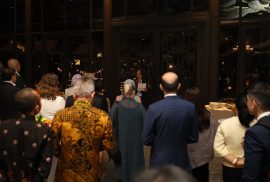
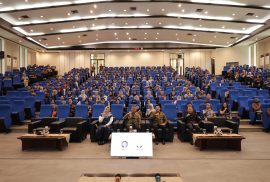
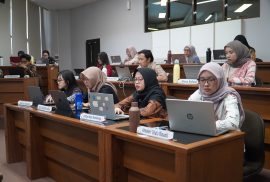
This growing concern was the focus of a presentation by Prof. Kai Michael Griese, an expert from Osnabrück University of Applied Sciences, Germany, during the Executive Series themed “How Can Universities and Industry Partners Co-Design a Sustainable Ecosystem That Drives Regional Innovation and Tech Transfer?” held on Saturday (09/04) at MBA FEB UGM Jakarta Campus and attended by 200 students.
During the session, Prof. Kai compared climate change to a greenhouse. CO2 in the atmosphere traps heat much like the glass of a greenhouse traps sunlight. A temperature rise of 1–4°C in Germany, he explained, would bring impacts ranging from heatwaves to food and water shortages, as well as the potential for migration and conflict. He also highlighted that only a small number of companies are responsible for a disproportionately large share of global carbon emissions. Citing relevant data, he noted that around 178 corporate entities are responsible for nearly 70% of global fossil fuel and cement emissions.
Through a research project titled “KlimaEvent,” Prof. Kai and his team developed a five-step process for climate adaptation. This process begins with identifying and evaluating potential impacts, followed by setting objectives, formulating strategies, developing and implementing mitigation measures, and finally, continuously evaluating the effectiveness of the steps taken. He also cited Germany’s enactment of the Federal Climate Adaptation Act (KAnG) as an example — the first national legal framework requiring federal, state, and local governments to take proactive measures against the climate crisis.

Closing his presentation, he added that certain business models may even need to be abandoned in the future, as they will no longer be able to withstand the effects of climate change. Nevertheless, he remained optimistic, reminding the students that solutions to slow the pace of climate change already exist. These include the use of wind power, solar energy, and biogas — solutions that simply await the collective courage of many stakeholders to implement them on a larger scale.
Through this Executive Series, MBA FEB UGM Jakarta Campus hopes that students will gain a deeper understanding of the urgency of climate change and be able to translate it into an applicable business perspective. Furthermore, it is hoped that sensitivity toward sustainability and environmental responsibility can be integrated into every strategic decision they make in the future.
Humas: Suci Hapsari
Editor: Alfian Rama Aditya